
Sunrise vs Sunset Elopement in Grand Teton National Park: How to Choose the Right Time
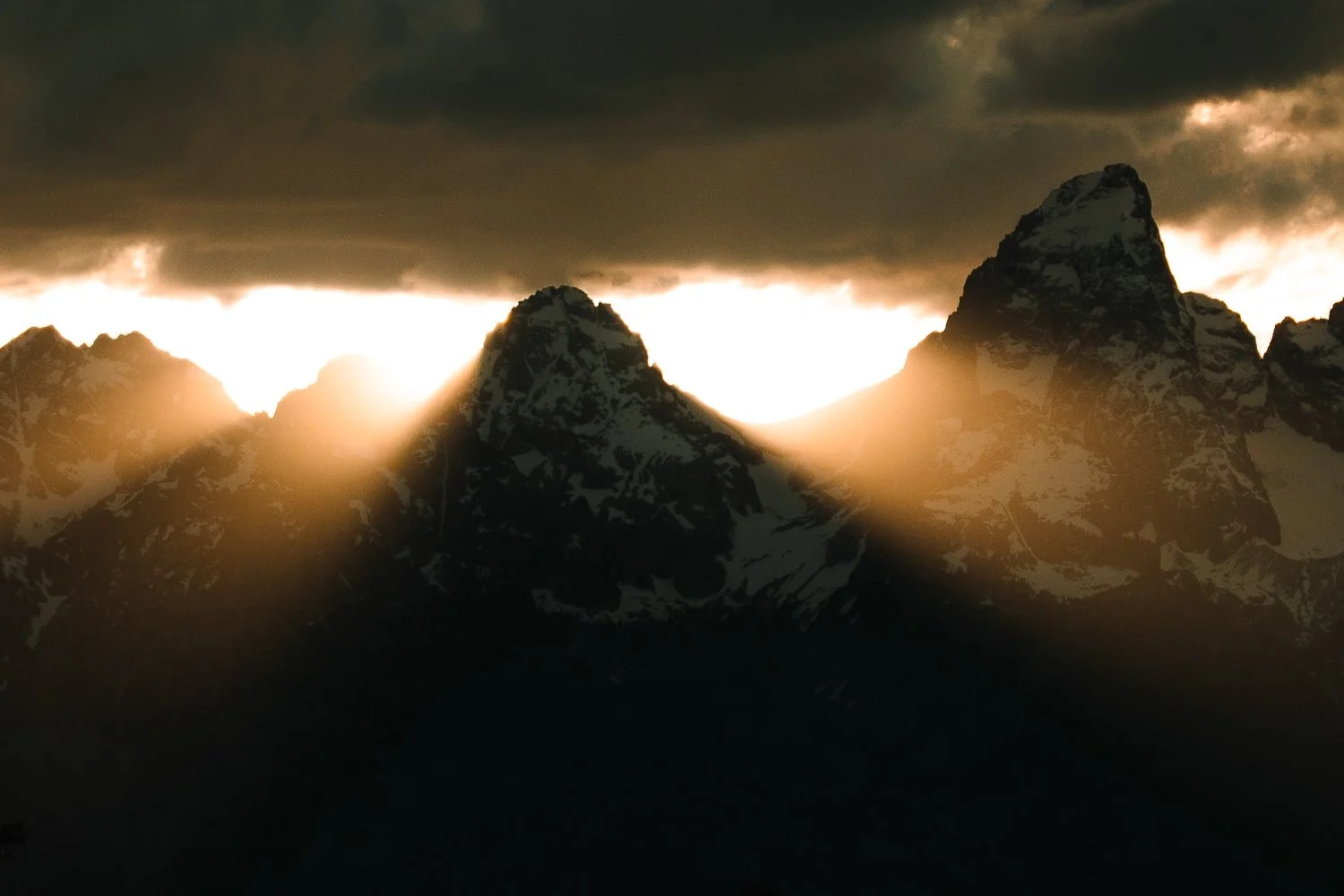
Choosing between a sunrise or sunset elopement in Grand Teton National Park is one of the most meaningful decisions you’ll make when shaping your day. Light, crowds, temperature, pacing, and even the emotional tone of the experience all shift depending on when you choose to say your vows.
If you're still in the early stages of planning and need help with permits, ceremony locations, marriage licenses, or how the process works, we put together a full guide on how to elope in Grand Teton National Park.
Both sunrise and sunset elopements in Grand Teton National Park can be beautiful, but they create very different experiences in terms of light, privacy, and how the day actually plays out.
There is no universally “better” option. Both can be incredibly beautiful. The right choice comes down to your priorities, your energy, and the type of experience you want to create together.
Below, we break down the real differences between sunrise and sunset elopements in the Tetons, along with seasonal considerations and example timelines to help you start imagining what your day could look like.
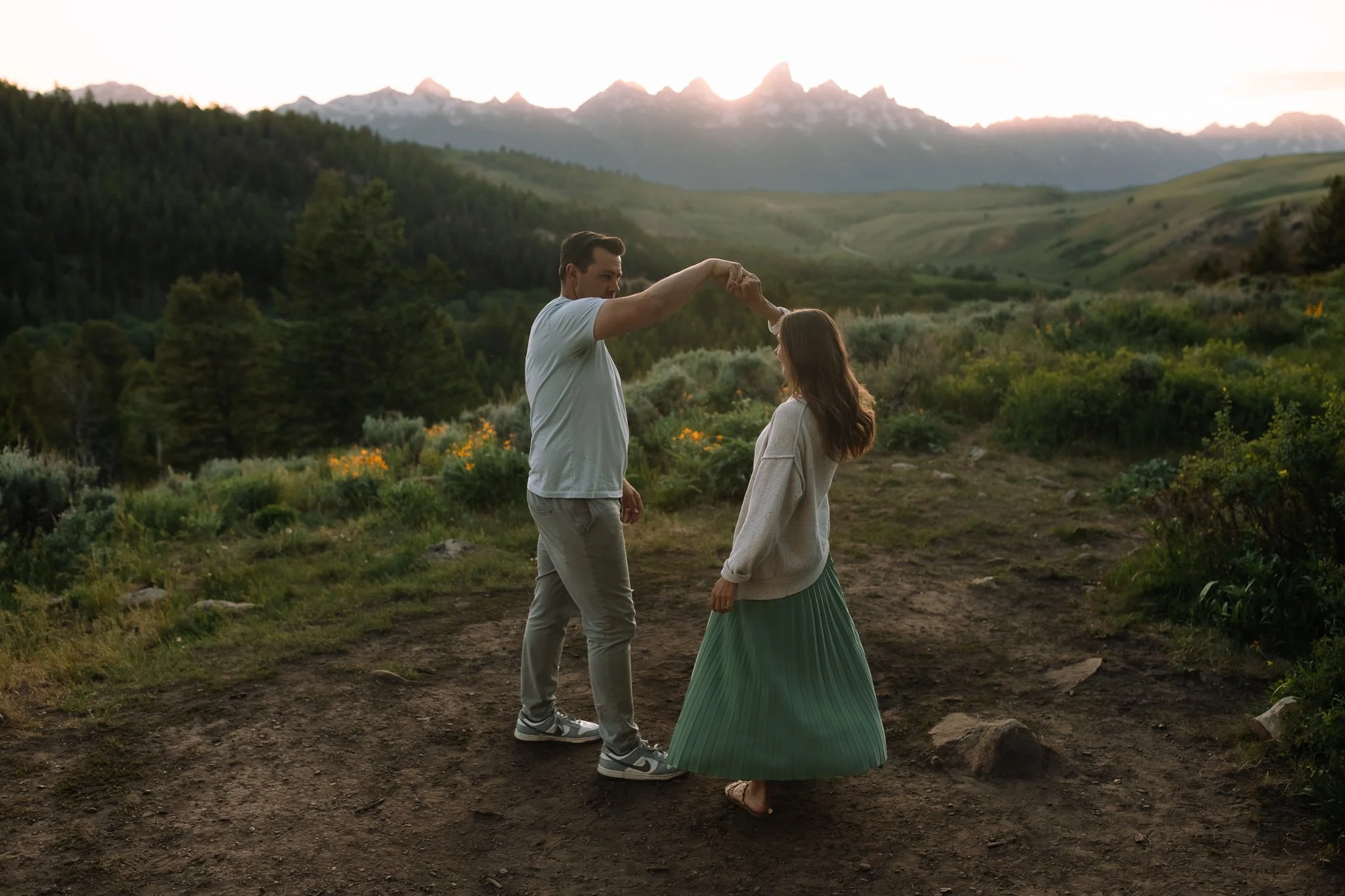
If you’re beginning to explore what an elopement in the Tetons could look like, learn more about working with us for Jackson Hole wedding and elopement photography, or reach out if you want help starting to shape your day. We build custom elopement timelines based on your locations, season, and priorities so everything feels effortless. For couples still deciding where to say their vows, we also share a detailed roundup of our favorite elopement locations in Grand Teton National Park, based on light, privacy, accessibility, and overall experience.
Why Time of Day Matters for a Grand Teton Elopement
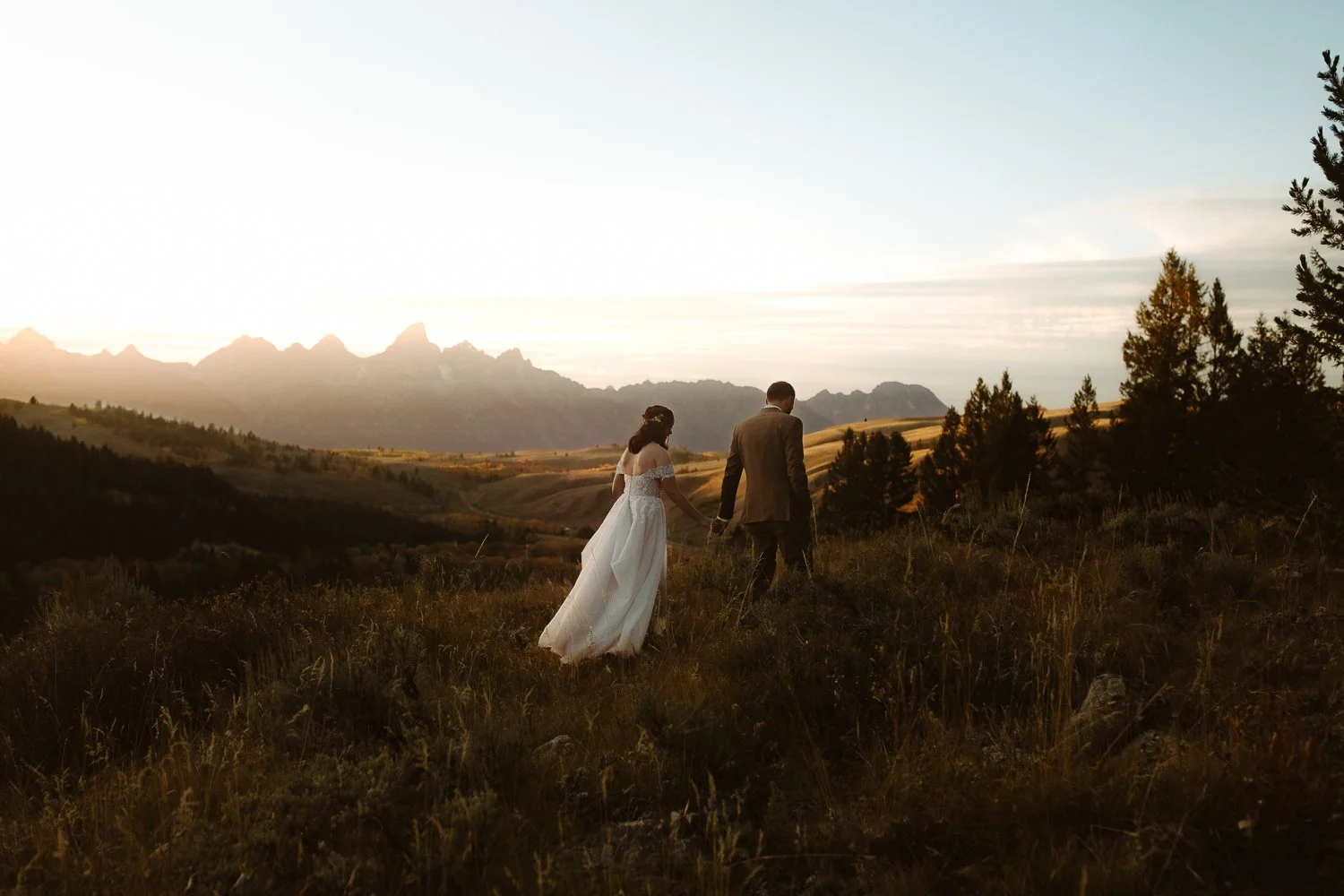
Time of day impacts far more than how photos look.
It affects:
Crowd levels and privacy
Temperature and wind
Parking and accessibility
How relaxed or fast-paced your timeline feels
The overall mood of the day
If you’re drawn to quiet, slow mornings and a peaceful atmosphere, sunrise may feel like home. If you love warmth, glowing light, and easing into the day, sunset may be a better fit.
Sunrise Elopements in Grand Teton National Park
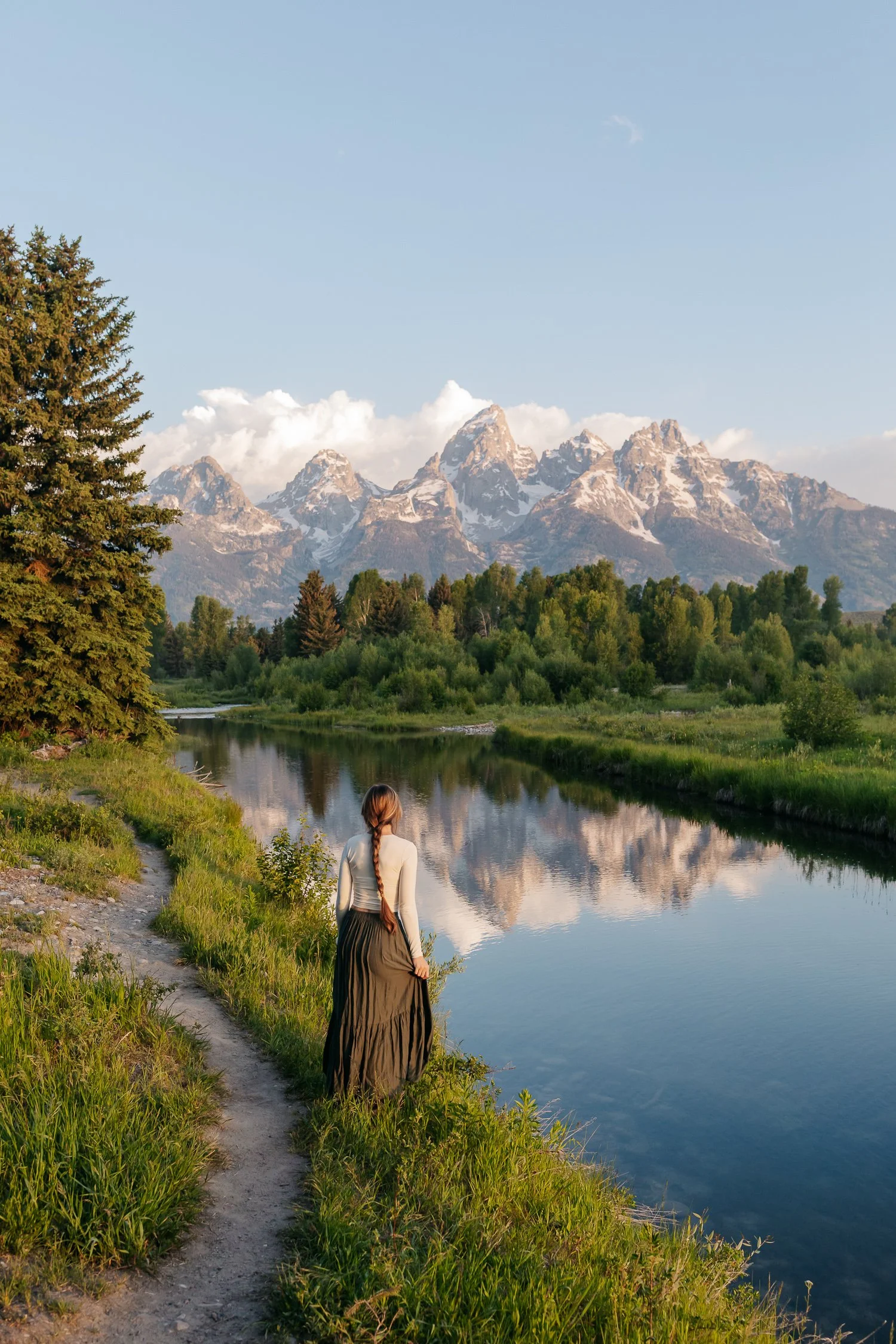
Sunrise in the Tetons is calm and quiet, and it often feels more removed from everything else going on in the park.. The mountains catch first light, wildlife is active, and many iconic locations are nearly empty.
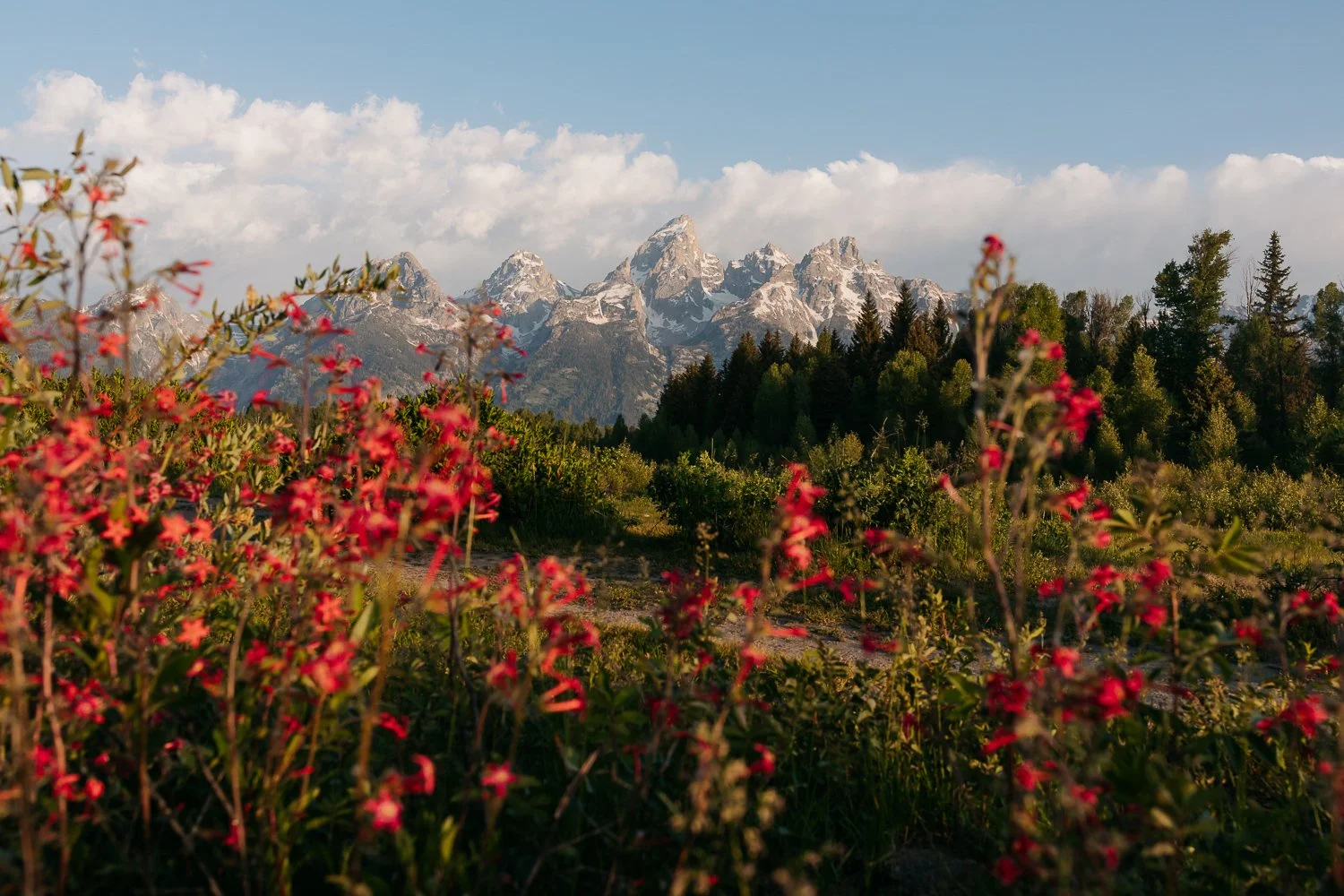
Why Couples Choose Sunrise
Minimal crowds
Soft, even light
Peaceful, intimate atmosphere
Easier parking at popular locations
Glass-like reflections on lakes and the Snake River
Sunrise elopements often feel very grounded and inward focused, with space to be fully present with each other.
Things to Consider for a Sunrise Elopement
Very early wake-up time
Colder temperatures, even in summer
Less sleep the night before
For couples who value privacy and atmosphere, sunrise is often worth the early alarm.
Great Sunrise Locations in the Tetons
Schwabacher Landing
Mormon Row
Snake River Overlook
Oxbow Bend
The Wedding Tree
These locations consistently shine at first light and tend to be quieter early in the morning.
It’s also worth noting that the Wedding Tree is the only dog-friendly elopement location in the Grand Tetons that isn’t a roadside pull-off or parking lot. Because of that, it’s a meaningful option for couples who want a true ceremony setting while still including their dog. We walk through exactly how that works, along with timing and logistics, in this guide to the Wedding Tree dog-friendly elopement location in the Grand Tetons.
Sunset Elopements in Grand Teton National Park
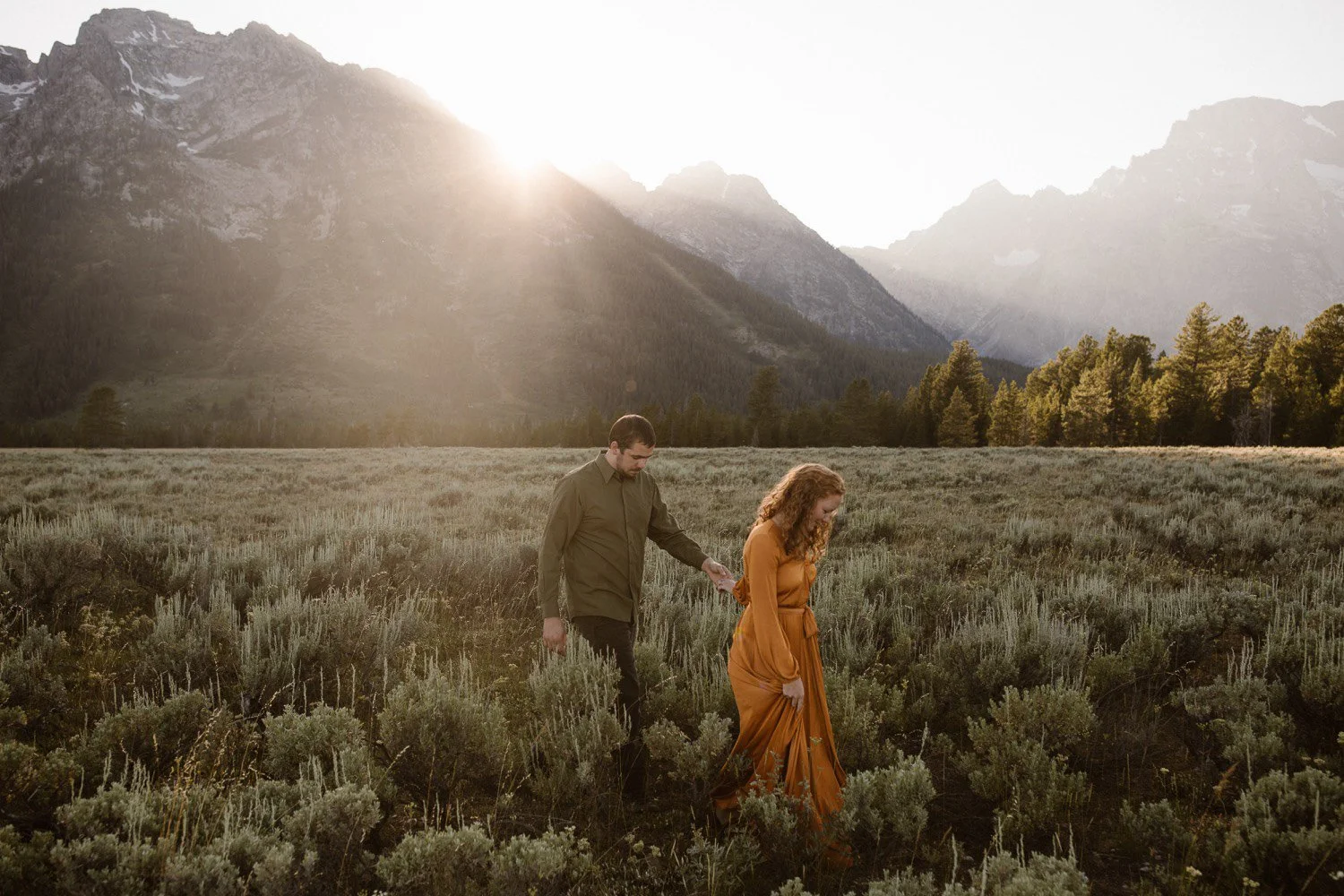
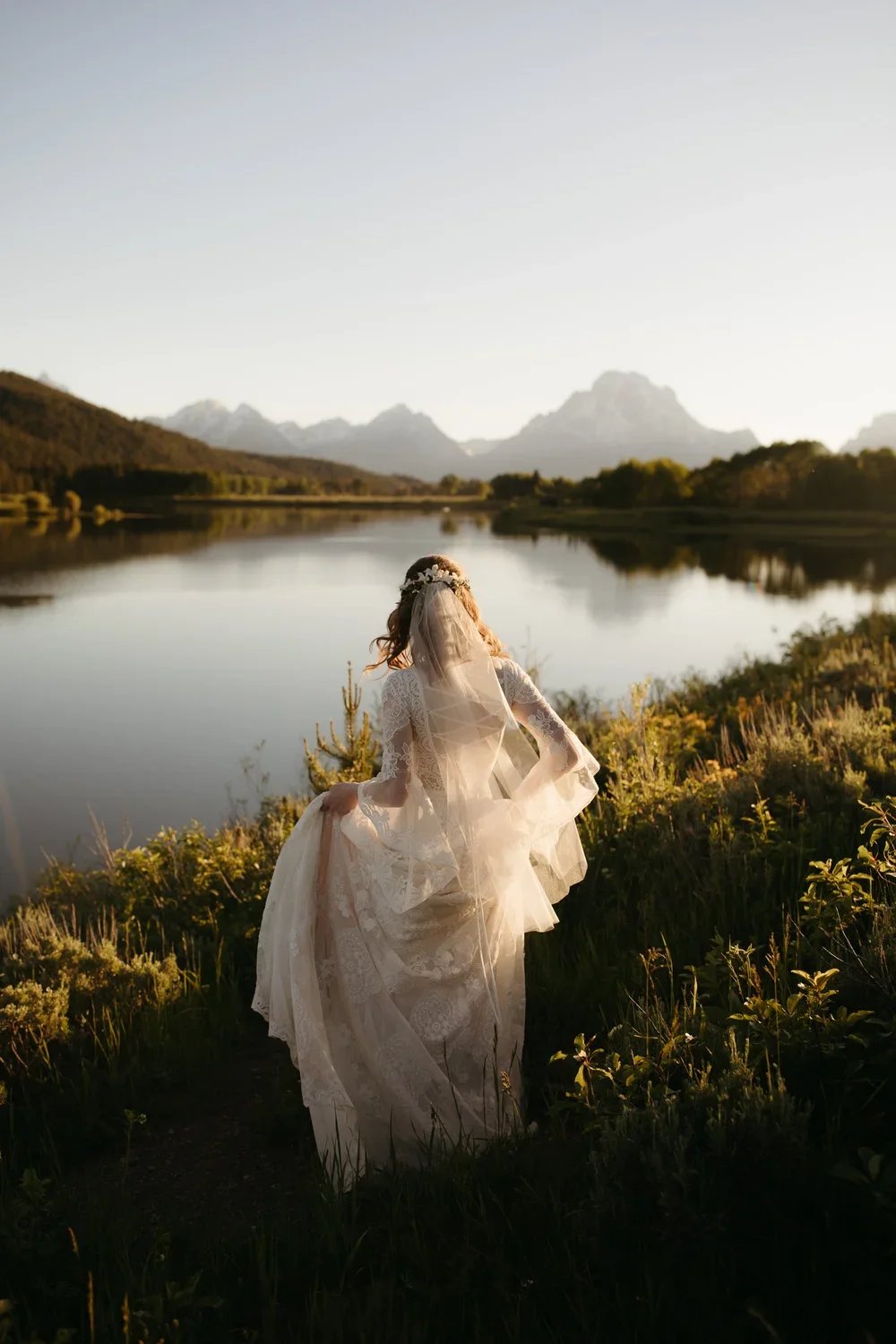
Sunset brings warmth, golden light, and dramatic skies. The energy in the park feels more alive, and many couples love building toward their ceremony as the day unfolds.
Why Couples Choose Sunset
Warmer temperatures
Slower, more relaxed morning
Golden-hour glow and color in the sky
Feels celebratory and cinematic
Sunset elopements pair beautifully with daytime exploring, picnics, or a first look earlier in the day.
Things to Consider For A Sunset Elopement
More people at popular overlooks
Parking can be limited
Some flexibility is needed to find quieter pockets
With thoughtful planning, we can still create privacy even during busier hours.
Great Sunset Locations in the Tetons
Mormon Row
Signal Mountain
Mountain View Turnout
Jenny Lake
While some couples choose to hold their ceremony at sunset, others plan their ceremony earlier and use the evening to move through multiple locations as the light shifts. This is exactly how it worked during this Snake River Overlook elopement in Grand Teton National Park, where the ceremony took place earlier in the day, followed by sunset portraits at Elk Flats, Oxbow Bend, and Mountain View Turnout.
Light in the Tetons
Light in Grand Teton National Park behaves differently than what standard sunrise and sunset times suggest.
Light in the Tetons doesn’t always match the official sunrise and sunset times. At sunset, the sun drops behind the mountain range well before it disappears below the horizon, meaning golden hour can happen earlier than expected. The closer you are to the base of the mountains, the sooner mountain shadow will fall over you. As you move farther east, away from the range, you can often “chase the light” and extend that warm glow for longer by choosing more open valley locations.
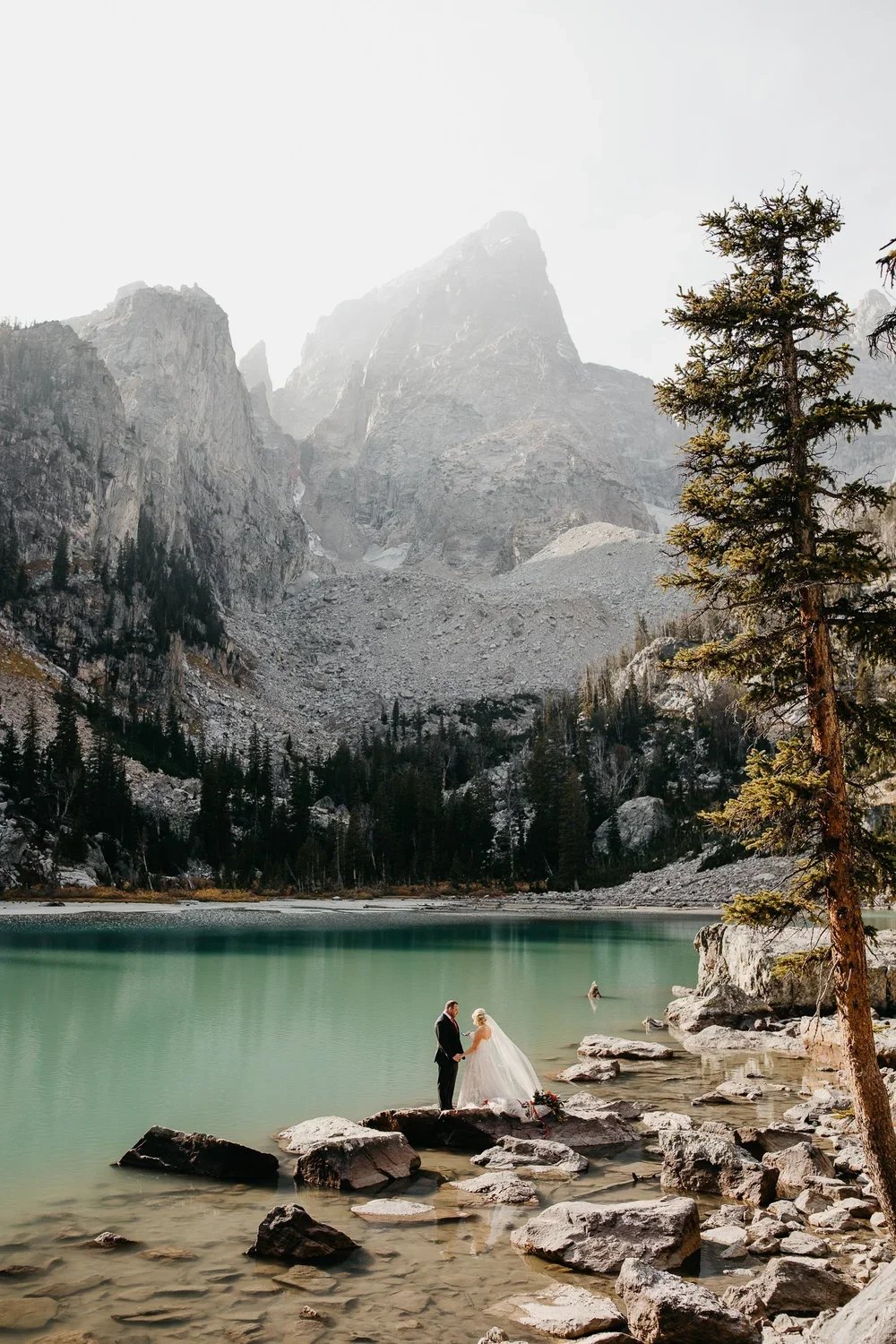
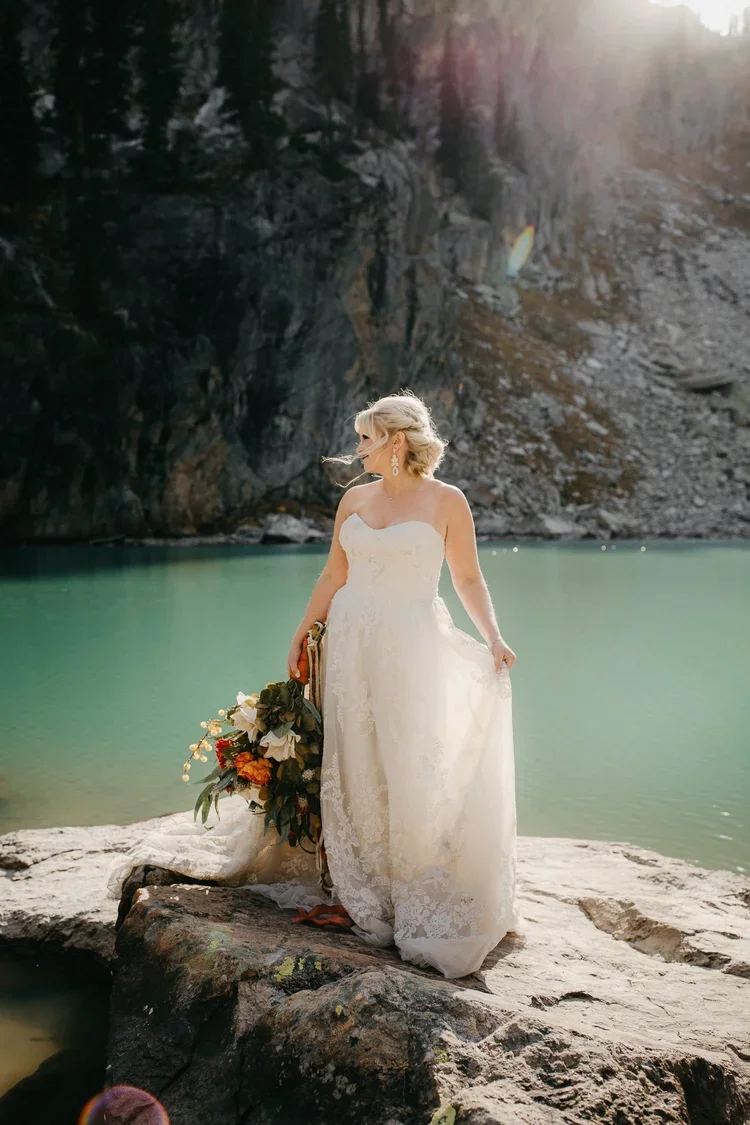
Sunrise behaves a bit differently. The first light tends to hit the peaks before it reaches the valley floor, often creating a soft pink or pastel cast on the mountains. The sun then rises into the valley fairly quickly, and once it does, light becomes more direct and contrasty. This can feel brighter and a little harsher than sunset light, but it works beautifully for things like forest hikes, shaded trails, and walking to lakes or river edges where trees and terrain naturally soften the light.
This is why we build timelines around where you’ll be at each moment, not just what time the sun officially rises or sets.
Seasonal Considerations
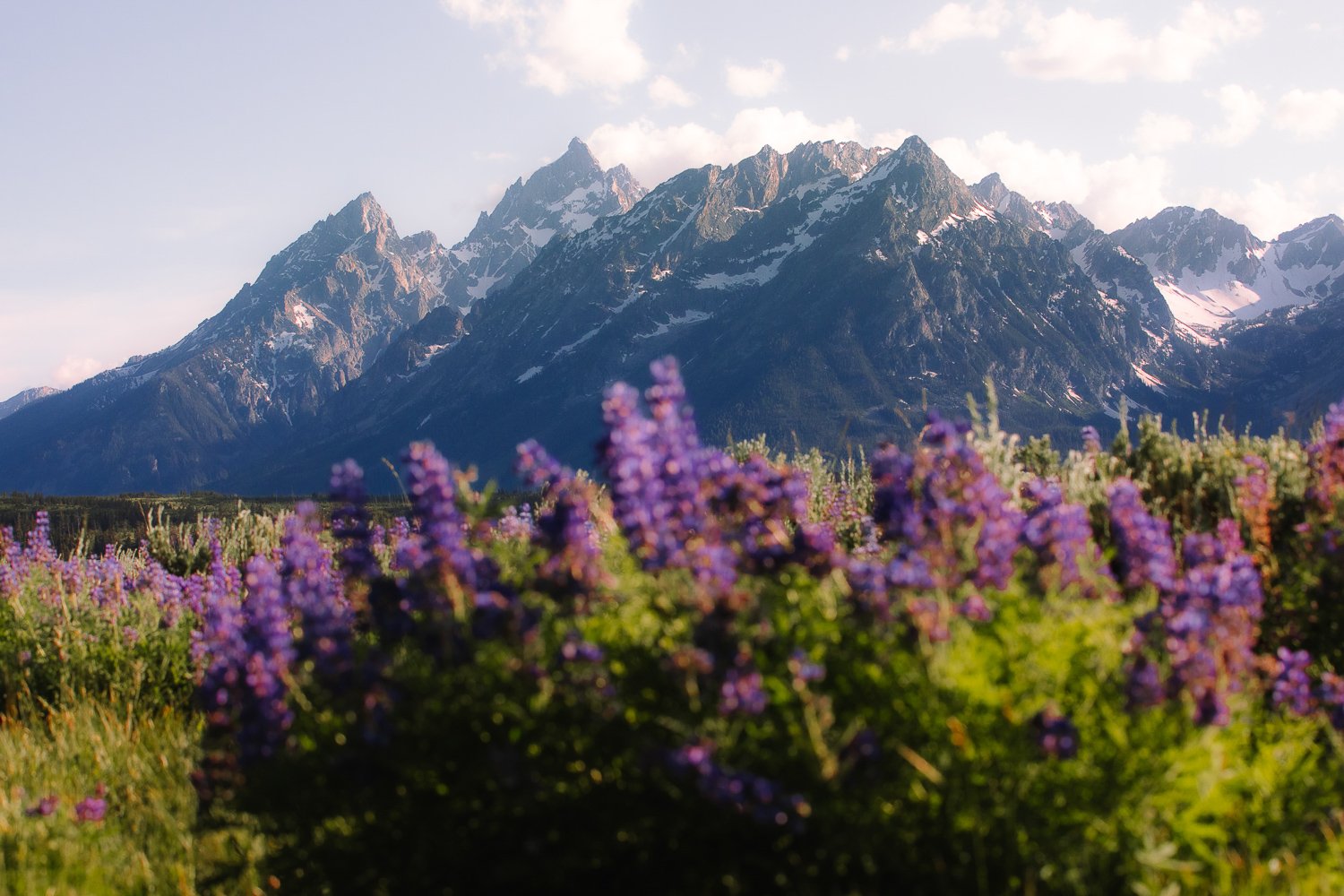
Spring (May–early June)
Lingering snow at higher elevations, fewer visitors, still cold.
Summer (mid-June–September)
Very early sunrises, long days, peak visitor season, and lots of wildflowers (June-July). Sunrise is especially helpful for privacy. Sometimes lingering wildfire smoke can be an issue in later summer (August-September).
Fall (late September–October)
Cooler air, fewer crowds, golden foliage, shorter days.
Winter (November–April)
Snowy, quiet, dramatic landscapes with limited access in most areas.
We factor all of this into timeline and location design.
These timelines are examples to help you visualize how a day can flow, but every elopement we plan is customized based on location, season, and priorities.
Sample Sunrise Elopement Timeline (5 Hours)
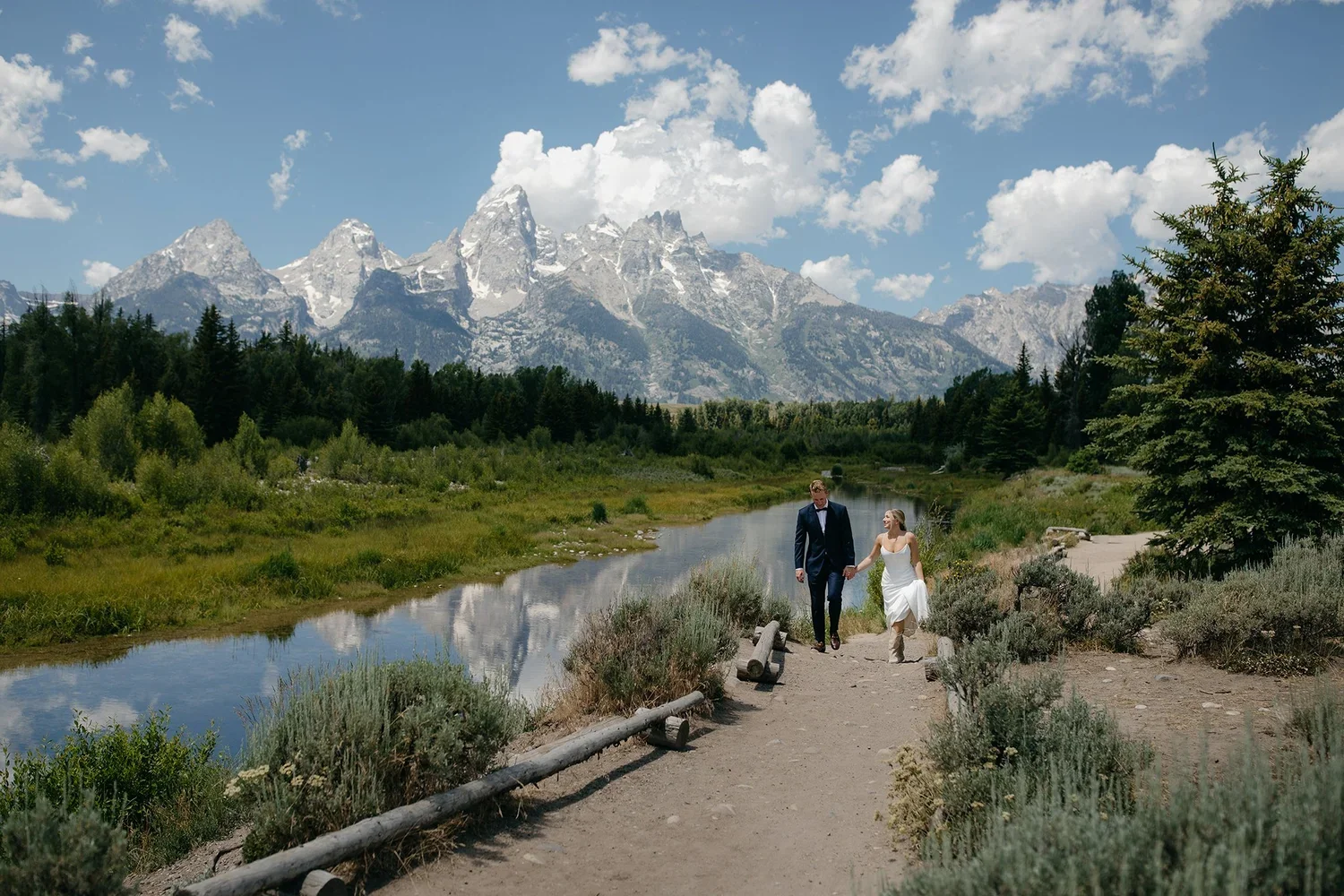
Designed for couples who want a simple, quiet morning focused on ceremony and portraits.
5:30 AM – Meet at ceremony location
6:00 AM – Sunrise ceremony
6:30 AM – Portraits near ceremony spot
7:30 AM – Secondary portrait location
8:45 AM – Coffee stop, breakfast picnic, or slow time together
9:45 AM – Final portraits
10:30 AM – Wrap coverage
This option keeps the morning calm and efficient while allowing multiple locations and unhurried moments.
Sample Sunset Elopement Timeline (6 Hours)
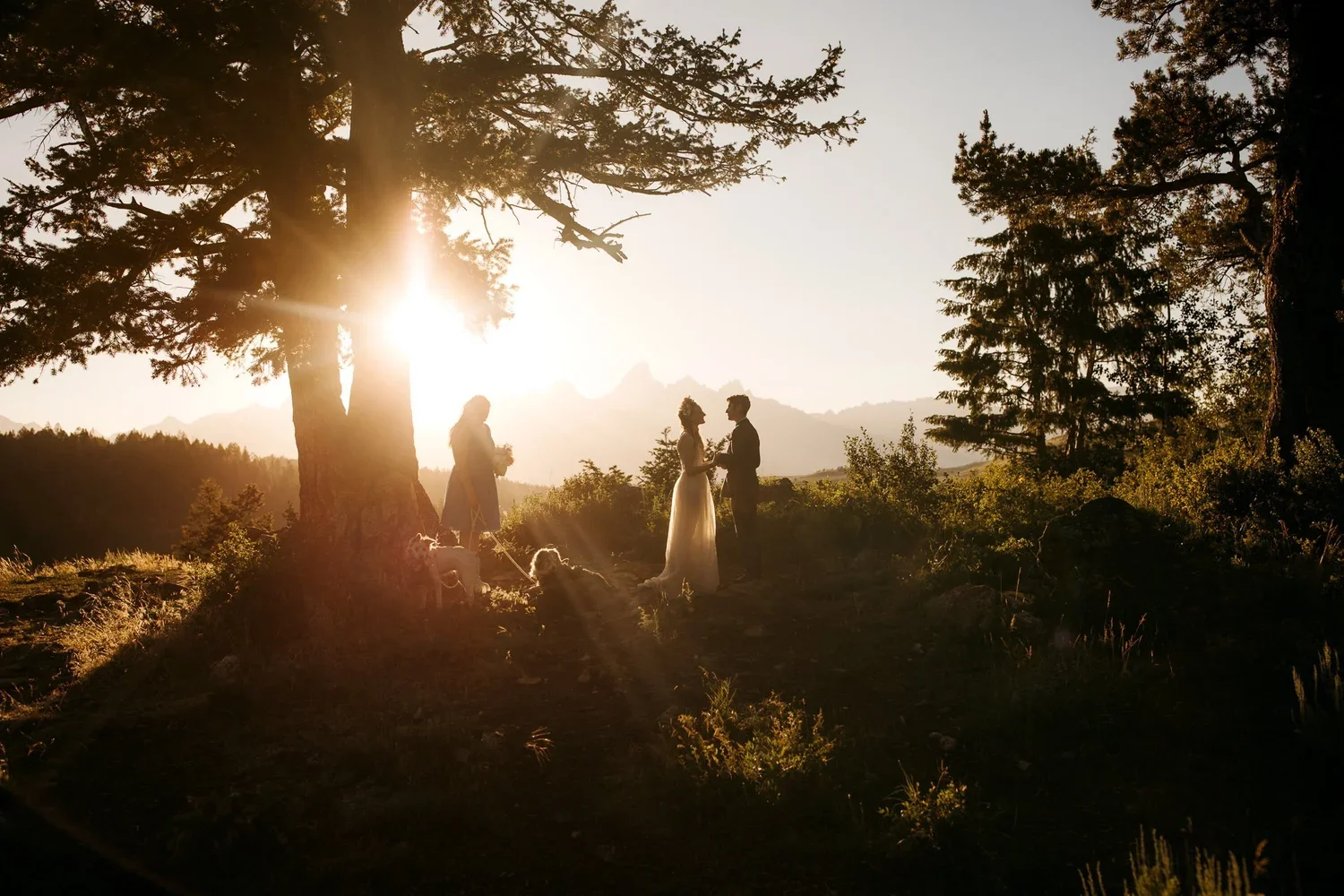
Designed for couples who want a slower build into the day and to center their ceremony around golden hour.
1:30 PM – Getting ready + details
2:30 PM – First look
3:00 PM – Portraits near lodging or nearby scenic area
4:30 PM – Break / travel / snack
5:15 PM – Arrive at ceremony area
5:30 PM – Ceremony
6:00 PM – Group photos + champagne
6:30 PM – Drive to second location
7:00 PM – Sunset portraits
7:30 PM – Blue hour / final portraits
8:00 PM – Wrap coverage
This timeline allows breathing room earlier in the day while keeping the emotional peak aligned with sunset light.
Sample Split-Day Coverage (4 Hours Morning + 4 Hours Evening)
A great option for couples who want the quiet magic of sunrise and the glow of sunset without rushing either.
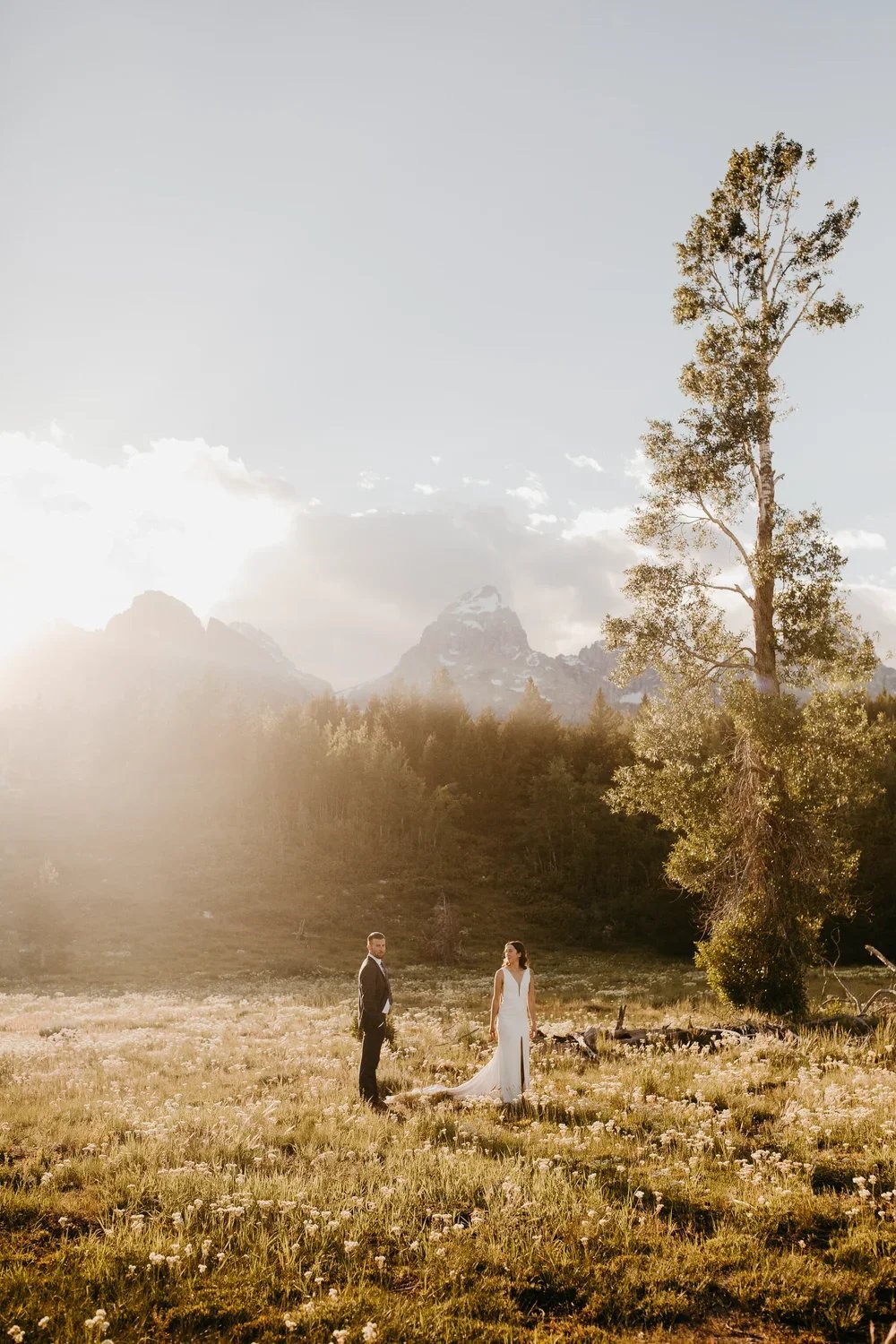
Morning Block | Sunrise
6:00 AM – Meet at Schwabacher Landing
6:15 AM – Sunrise first look & vows
6:45 AM – Portraits at Schwabacher Landing
7:15 AM – Additional portrait locations around the park
9:30 AM – Wrap morning coverage
(No getting ready coverage. Focus is entirely on connection and scenery.)
Evening Block | Sunset
4:30 PM – Meet near ceremony location
5:00 PM – Travel toward Wedding Tree area
5:30 PM – Ceremony
6:00 PM – Portraits nearby
6:45 PM – Drive to Snow King
7:30 PM – Ride to the top of Snow King
8:00 PM – Sunset portraits overlooking the valley
8:30 PM – Wrap coverage
This approach gives you two different experiences in one day: quiet, reflective morning moments and expansive, glowing evening views.
Split-day coverage is a great option for couples who want two very different experiences in one day. Matt and Bri’s elopement is a great example, beginning with a quiet morning ceremony at the Wedding Tree, followed by boarding their dog locally and meeting later in the day for a hike to Taggart Lake at sunset. You can see their full story here: Matt and Bri’s split-day Wedding Tree and Taggart Lake elopement.
Once you’ve decided what time of day feels right, the next step is understanding permits, legal requirements, and where ceremonies can actually take place. You can read our full guide to eloping in Grand Teton National Park here.
How to Decide Which Is Right for You
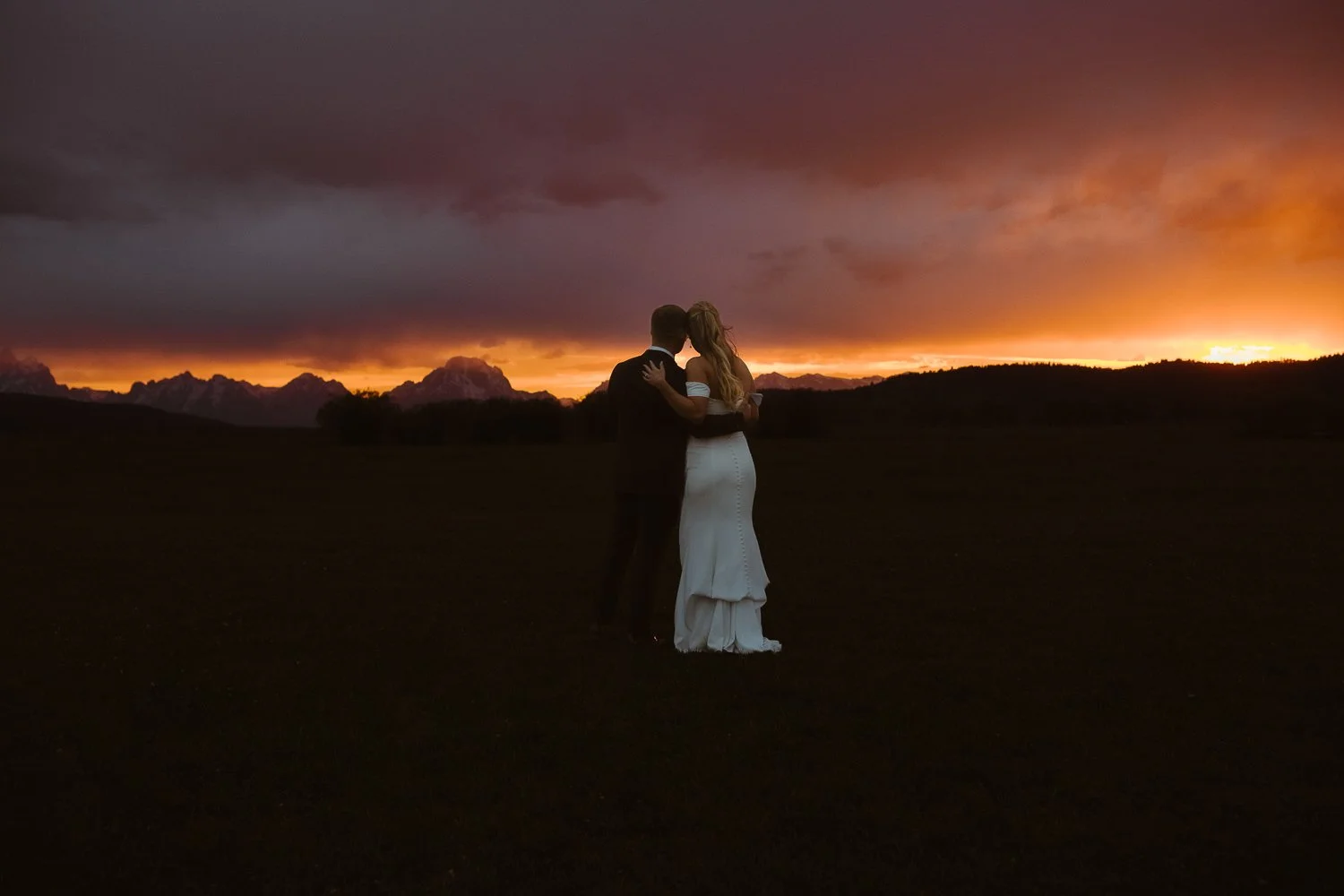
Ask yourselves:
Are we more energized in the morning or evening?
Do we prioritize privacy or warmth?
Do we want a slow morning or a slow evening?
Are crowds a major concern?
If solitude is your top priority, sunrise is often the better fit. If warmth, glow, and a gradual build feel more aligned, sunset may be perfect.
Some couples choose split-day coverage to experience both.
A Custom, Experience-Driven Approach to Timeline Planning
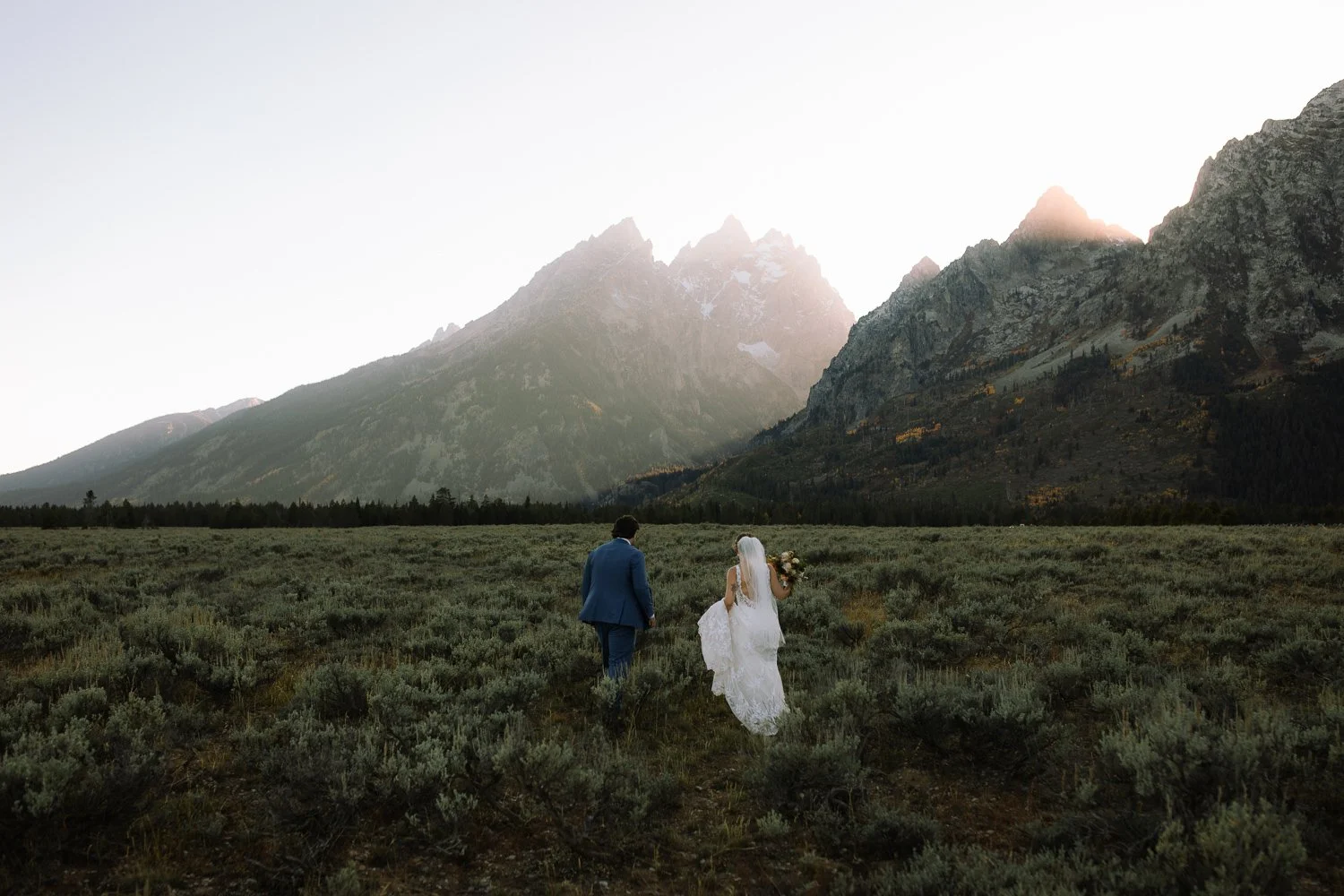
When you inquire with us, we don’t use templates or generic schedules.
We build a custom timeline for every couple based on:
The exact locations you’re considering
The scenery you’re drawn to (mountains, lakes, forests, overlooks)
Any hiking or walking involved
Whether you’re inviting guests
Portrait priorities
Exact driving times between locations
Exact sunrise or sunset times for your date and season
We’ve photographed elopements throughout the park in every season, which allows us to plan with a level of precision that removes stress for our couples. This includes factoring in exact access points, walking distances, and light patterns, like we did during this autumn elopement at Glacier View Turnout in Grand Teton National Park, where timing and location were key to preserving privacy and soft light.
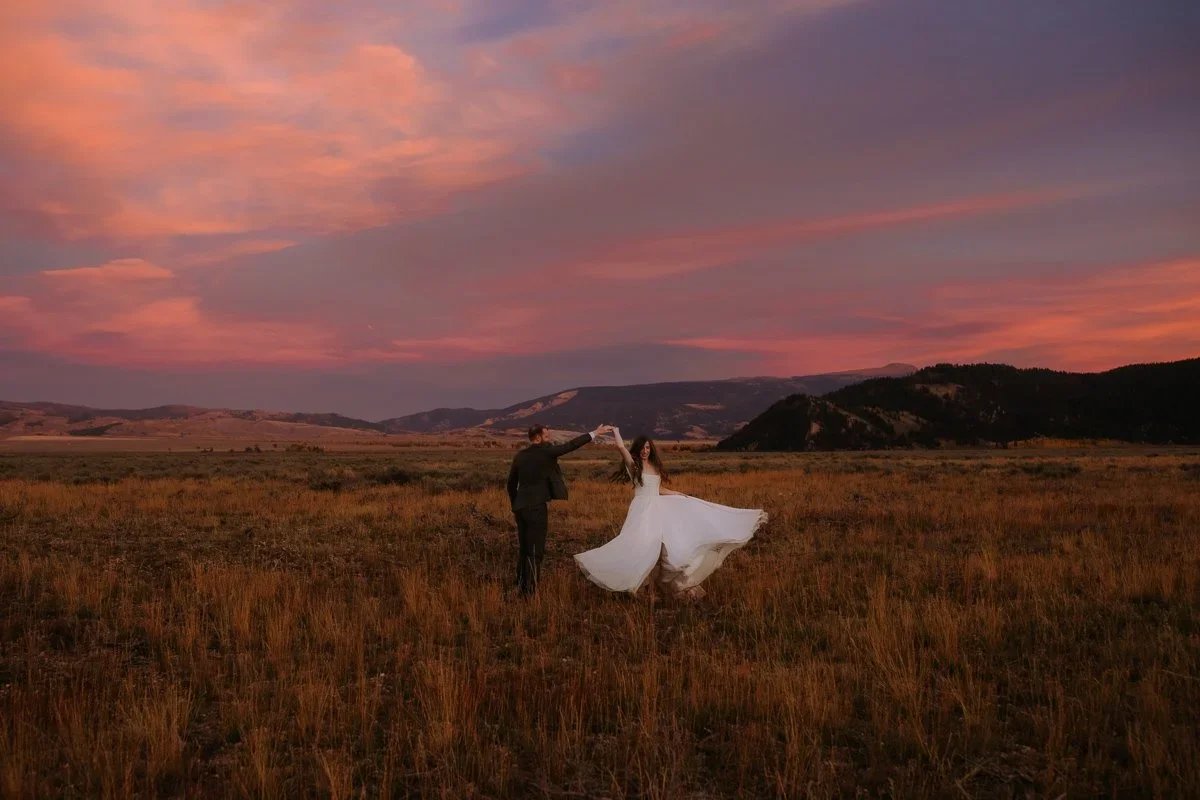
We spend hours crafting timelines so your day flows naturally, feels unrushed, and makes the most of the light. Because we know the park well and have photographed throughout the Tetons, we’re able to recommend locations based on the vibe you’re going for and help shape a day that feels thoughtful and personal.
If you’re beginning to explore what an elopement in the Tetons could look like, we’re happy to help you think through locations, timing, and how to shape a day that fits you.
Reach out through our contact form to begin planning your Grand Teton elopement experience.
Frequently Asked Questions About Sunrise vs Sunset Elopements
Is sunrise or sunset better for a Grand Teton elopement?
There isn’t one better option. Both can be beautiful, but they create very different experiences.
Sunrise tends to feel quieter and more private, especially in more accessible areas. That said, some well-known spots like Schwabacher Landing can still have a handful of photographers in the morning. Even so, it’s usually far less busy than sunset, and there’s always the added chance of seeing wildlife like moose, which makes it a really special place to start the day.
Sunset feels different. There’s more energy in the park, but there are still ways to find space. Locations that require a short hike, like Taggart Lake, often feel quieter in the evening since most visitors have already started heading back into town. It really comes down to whether you’re drawn to a quieter, slower morning or a warmer, more gradual build into the evening.
Are sunrise elopements less crowded in Grand Teton National Park?
In general, yes. Most locations are noticeably quieter at sunrise, especially during peak summer months.
That said, it depends on where you go. Roadside locations like Schwabacher Landing or Mormon Row can still draw photographers early in the morning. If privacy is a top priority, choosing a slightly less popular location or one that requires a bit of walking can make a big difference.
We help guide couples toward locations and timing that balance privacy with the kind of scenery they’re drawn to.
Do sunset elopements have better lighting?
Sunset light in the Tetons is often warmer and more golden, but it doesn’t always behave the way people expect.
Because the sun drops behind the mountains before it sets, some areas fall into shadow earlier than the official sunset time. The closer you are to the base of the range, the faster that happens.
At the same time, sunset tends to offer a longer window of usable light overall. By moving through different areas of the park, especially farther out into the valley, you can often stay in good light longer and extend that softer, glowing look.
Sunrise works a little differently. The light comes into the valley quickly, and once it does, it can become brighter and more contrasty sooner than people expect. Both can be beautiful, but they create a different feel depending on how you plan around them.
If you’re still deciding between ceremony locations, permits, or how the planning process works overall, this complete Grand Teton elopement planning guide may help.